
Last Updated: November 26, 2026
Quick Summary
The best way to pair jam with cheese is to match the spread’s sweetness and heat to the cheese’s intensity: mild cheeses want gentle fruit jams, while bold, aged cheeses stand up to spicy pepper jams. Match intensity first, then contrast flavor, and start with roughly a quarter-teaspoon of jam per cracker.
- Taste the cheese alone to note its intensity and texture before choosing a spread.
- Start with roughly a quarter-teaspoon of jam per cracker and add more only if needed.
- A pepper jam is the classic match for cheddar, cutting its sharpness with sweet heat.
- Brie and cream cheese are the best cheeses for raspberry jam because both are soft and mild.
- Serve jam in a small dish beside the cheese so guests control the ratio.
Table of Contents
- How to Pair Jam with Cheese
- The Best Jam for Cheese and Crackers
- What Jam Goes with Cheddar Cheese
- What Cheese Goes with Raspberry Jam
- Frequently Asked Questions
How to Pair Jam with Cheese
The best way to pair jam with cheese is to match the spread’s sweetness and heat to the cheese’s intensity: mild cheeses want gentle fruit jams, while bold, aged cheeses stand up to spicy pepper jams.

The Best Jam for Cheese and Crackers
The best jam for cheese and crackers balances sweetness with acidity or heat so it lifts the cracker instead of drowning it. Use this three-step method with whatever you have on hand.
Step 1, Taste the cheese alone. Note its intensity (mild, medium, or bold) and texture (soft, semi-firm, hard and aged, or blue).
Step 2, Match intensity first, then contrast flavor. Mild cheese wants a gentle, fruit-forward jam so the dairy isn’t buried; bold, aged, or salty cheese wants acidity, heat, or tang to cut the richness.
Step 3, Adjust the ratio. Start with roughly a quarter-teaspoon per cracker and add more only if the cheese still dominates. Too much spread on a delicate cheese is the most common mistake.
Use this matrix to scan by cheese style:
| Cheese style | Intensity | Best spread style | Example pairings |
|---|---|---|---|
| Soft and creamy (brie, camembert, cream cheese) | Mild | Sweet-tart fruit jam | Raspberry, strawberry, citrus marmalade |
| Fresh goat cheese | Mild to medium | Bright fruit or honeyed jam | Peach, pear, fig |
| Semi-firm (Manchego, young cheddar) | Medium | Fruit jam or mild pepper jelly | Fig, quince paste, jalapeño jam |
| Hard and aged (sharp cheddar, aged gouda) | Bold | Pepper jam, chutney, or fig | Habanero jam, tomato chutney, fig jam |
| Blue (gorgonzola, roquefort) | Bold and salty | Sweet and tangy | Pear jam, fig, honeyed citrus marmalade |
Choose a neutral cracker, water crackers, plain crostini, or a mild seeded cracker, so the cheese and jam carry the flavor.
Our marmalades bring a bright citrus edge that works especially well with soft and blue cheeses.
Watch out: a jam that tastes pleasant alone can overpower a mild cheese, always taste the combination before committing a whole board. Our FAQ page answers common questions about heat levels and how to use the jams.
What Jam Goes with Cheddar Cheese
A pepper jam is the classic match for cheddar: the sweet-heat cuts through its sharpness and makes each bite taste richer. For young, mild cheddar, a gentler jalapeño jam keeps the heat in check.
Our Earl’s Gone Wild Jalapeño Jam is mild and sweet, with fresh jalapeño flavor.
Watch out: too much hot jam on a mild cheddar will bury the cheese. Start with a thin layer.
What Cheese Goes with Raspberry Jam
Brie and cream cheese are the best cheeses for raspberry jam because both are soft and mild, so the jam’s sweet-tart flavor stands out. A salty blue also works, since the sweetness balances the sharp bite. For a bolder contrast, try a habanero jam to cut the sweetness with heat.
Raspberry jam suits:
- Soft, creamy cheeses like brie and camembert, the classic match, because the fat softens the jam’s tart edge
- Fresh goat cheese, the tang echoes the tartness of the berries
- Salty blues in small amounts, the sweetness balances the sharp, salty bite
- Mascarpone and ricotta, mild enough to let the fruit lead, good for a dessert-style board
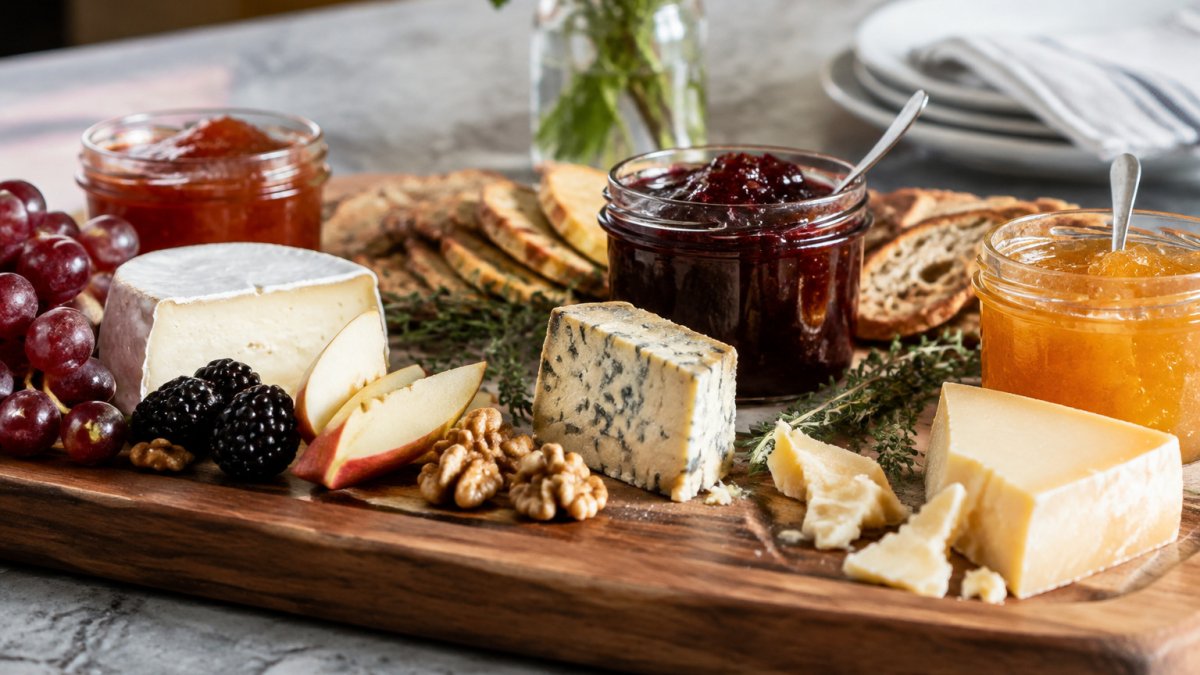
Serving and quantity. Serve jam in a small dish beside the cheese rather than pre-spread, so guests control the ratio and the cracker stays crisp.
Make-ahead and storage. Spoon out only what you expect to use; jam that has sat out with cheese and crackers should be discarded, not returned to the jar. Refrigerate after opening and use within the label’s timeframe.
Dietary note. Raspberry jam is fruit-based, but check labels for added sugar or pectin sources, and confirm any cheese fits your dietary needs.
Pairing jam with cheese comes down to balance: match the spread’s sweetness and heat to the cheese on your board. Earl’s Gone Wild makes small-batch pepper jams and citrus marmalades with real, recognizable ingredients, built for cheese boards, grilling, and gifting. Browse the lineup and find your next board favorite. Add to cart and build a spread worth sharing.
Frequently Asked Questions
Do cheese and jam go together?
Yes. The combination works because sweetness balances a cheese’s salt and sharpness. A mild cheese like brie softens a tart fruit spread, while a bold aged cheddar stands up to a sweeter jam. The key is matching intensity: delicate cheeses need lighter jams, and strong cheeses can handle bold, sweet, or spicy spreads without being overwhelmed.
What is the 3-3-3 rule for a cheese board?
The 3-3-3 rule means three cheeses, three accompaniments, and three types of crackers or bread. For the accompaniments, pick a fruit jam, a savory spread like pepper jelly, and something briny or crunchy such as olives or nuts. This keeps the board balanced without overcrowding it, and it gives guests clear pairing options to try.
How much jam should you serve with cheese?
Plan on about one tablespoon of jam per person per cheese variety. For a board serving six people with three cheeses, that is roughly one-third cup of each spread. Small bowls or ramekins keep portions neat, and you can always refill. Serving less at first prevents waste and keeps the board looking clean throughout the event.
